About the Craft
An immersive journey into Tholu Bommalata — "Charma Chitrakara," an ancient folk art of India with over 2000 years of history.
Leather Puppet Show
Tholu Bommalata, known as "Charma Chitrakara," is one of the most ancient traditional art forms of India. It involves creating detailed puppets from goat and sheep hides, processed to become translucent.
The tradition dates back more than 2000 years, serving as a powerful storytelling medium for narrating mythological stories and moral lessons through the magical interplay of light and shadow.
The art form flourished during the Vijayanagara Empire, particularly under the patronage of King Sri Krishnadevaraya in the 16th century, becoming a symbol of royal cultural prestige.
Our traditional performance was graced by the presence of Honorable Prime Minister Shri Narendra Modi Ji
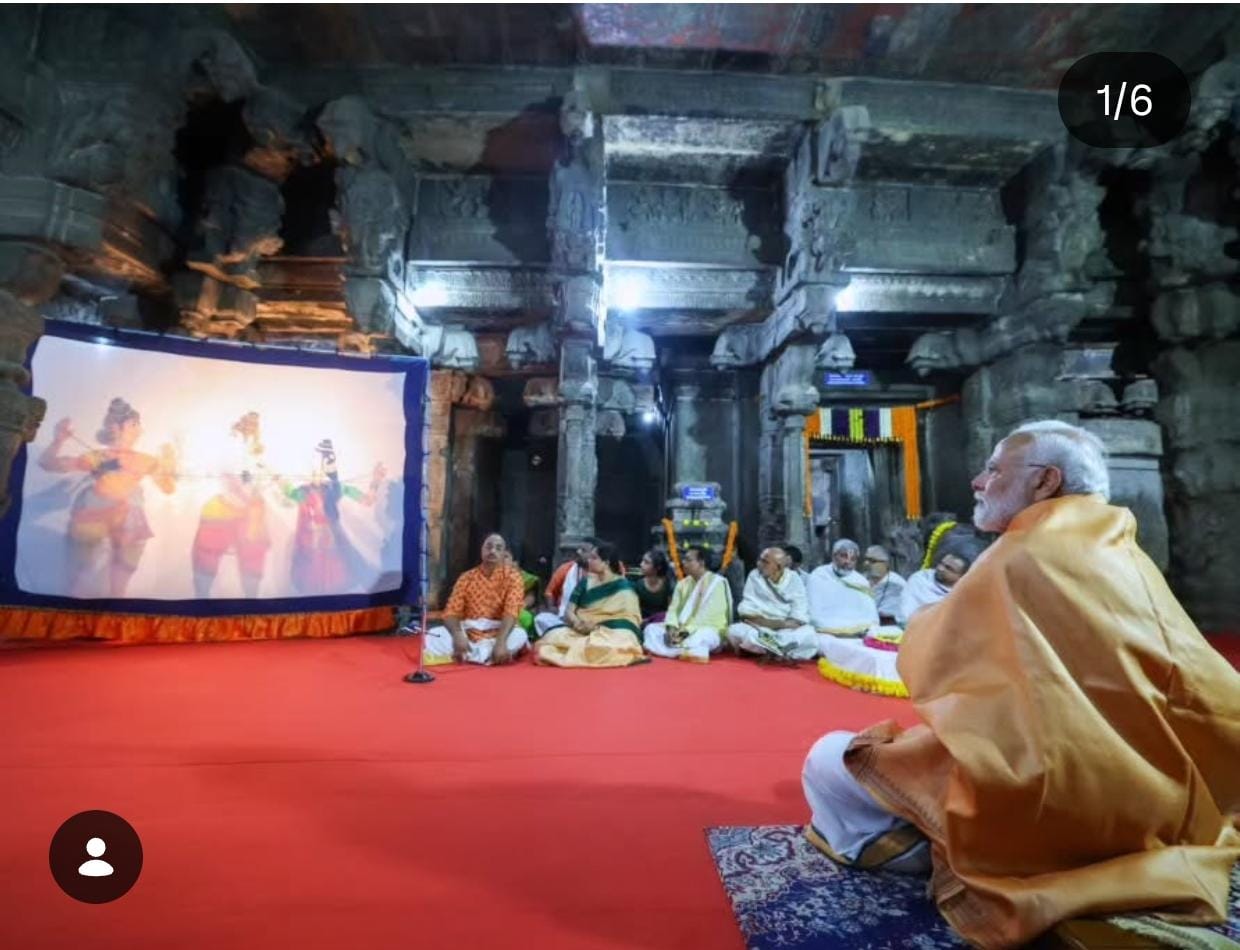
Traditional Charma Chitrakara Art
The Process of Making
Every puppet is a labor of devotion—born from raw hides, treated with lime, and shaped by master hands.
Skin Treatment
Goat skin is cleaned and soaked. It is treated with lime for several days to achieve softness and that signature translucency.
Sun Drying
Skin is stretched and pinned to a wooden frame, then left to dry under the sun for 4 to 6 days until it becomes stiff and translucent.
Intricate Sketching
Master artisans draw complex designs of deities and characters directly onto the leather surface.
Natural Coloring
Figures are painted using natural dyes derived from vegetables and minerals to ensure vibrant, lasting hues.
Precision Cutting
Using special knives and tools, the shapes are cut out with extreme precision, highlighting delicate perforations.
Assembly & Performance
Joints are connected with thread or pins, then mounted on bamboo sticks, ready to dance on the shadow screen. Bamboo is also used for making artistic lamps.
Sacred Tools & Mediums
Goat & Sheep Skin
Processed through traditional soaking and scraping methods to reach near-translucency for shadow projections.
Vegetable Dyes
Natural colors derived from mineral extracts and plants, ensuring an eco-friendly and traditional aesthetic.
Bamboo & Iron
Strong iron skeletons for structure and thin bamboo sticks for precise, expressive manipulation during shows. Bamboo is also used for making lamps.
"The leather must speak for itself when the light touches it — our hands only guide what the material already wants to become."— Sindhe Sreeramulu, National Award Winner
700 Years of Heritage
Trinetra Charma Chitrakara traces its roots through centuries of shadow and light.
Migration & Origins
Performers from Maharashtra migrated and settled in Nimmalakunta, bringing the sacred art as a religious offering.
Golden Era Patronage
Flourished under the Vijayanagara Empire and King Sri Krishnadevaraya, becoming a symbol of royal cultural prestige.
Kullayappa Arrival
The grandfather of artist Sreeramulu arrived in Nimmalakunta, establishing the family's deep artisanal roots.
The Great Revival
Father Sindhe Kullayappa reignited interest by applying ancient techniques to modern interior design.
National Recognition
Sindhe Sreeramulu received the National Award in 2006, marking a modern renaissance for Trinetra Charma Chitrakara.